Nothing here
was typed in.
Colors are computed from the dates and the dependencies.
One place, every angle — schedules, documents, money and people that never disagree.
Every house down the side, every step across the top, and the cells can see each other.
Move one date, and every date that depends on it moves with it.

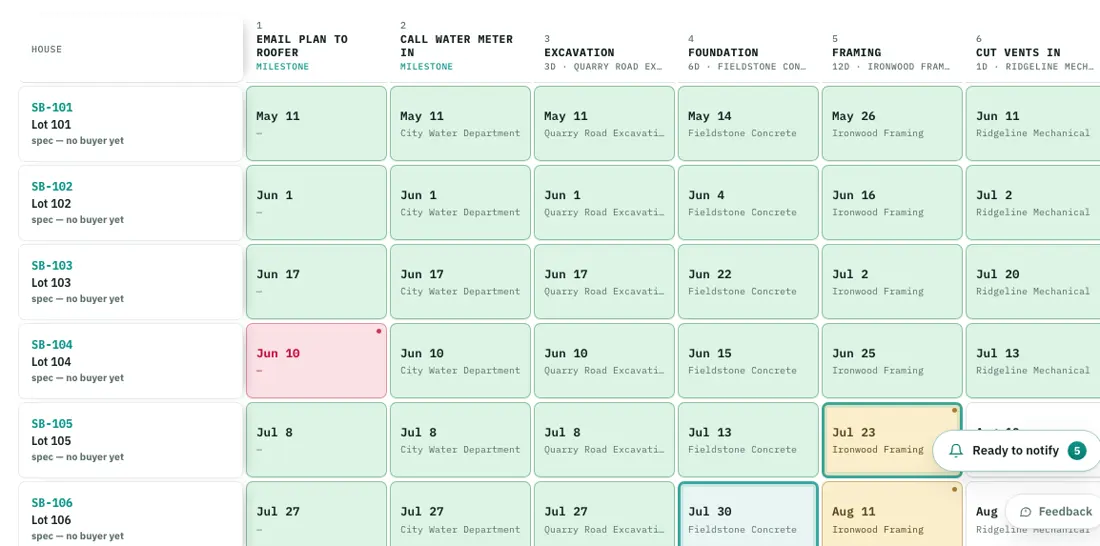
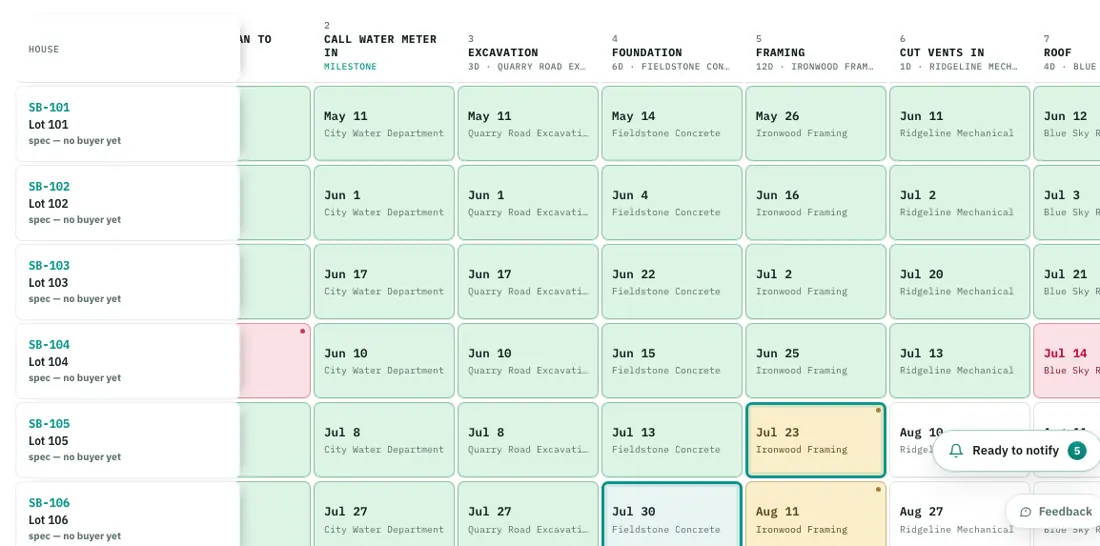
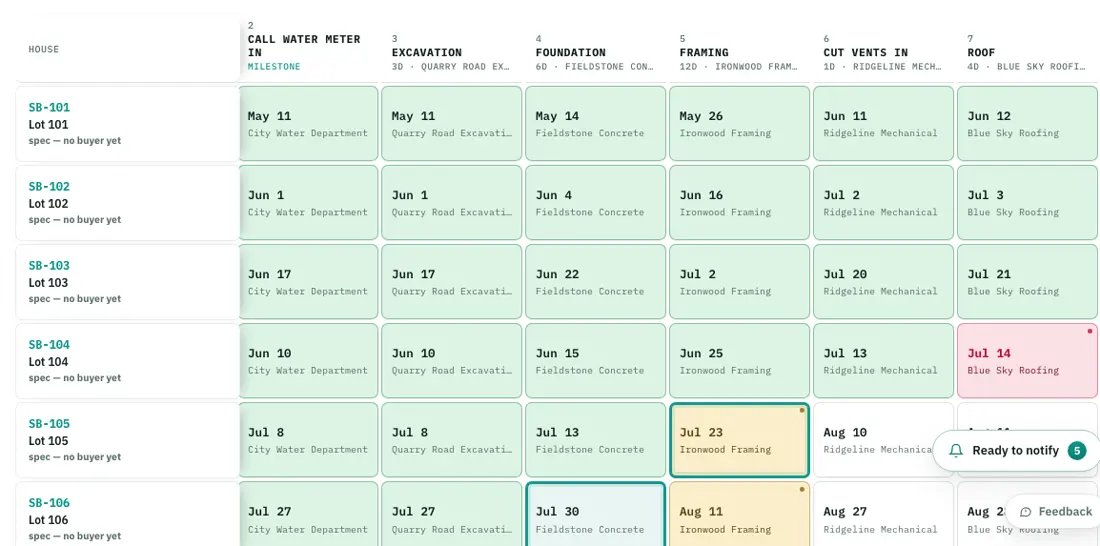
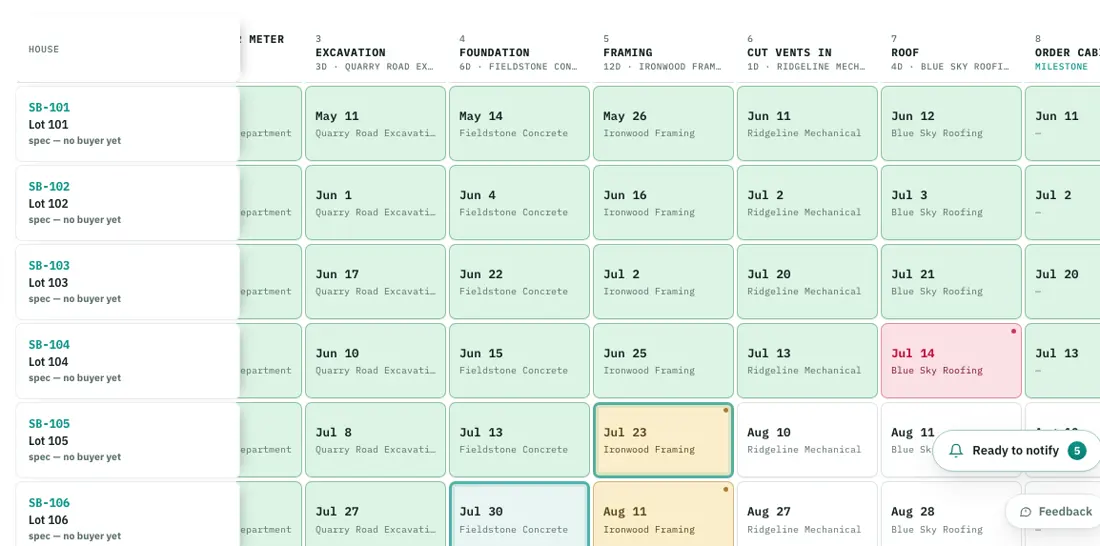
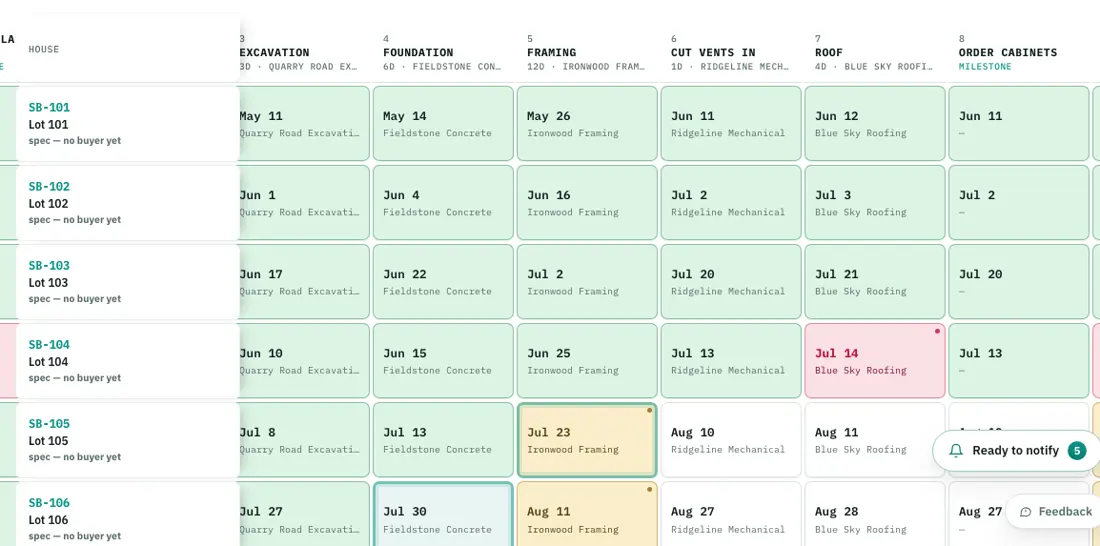
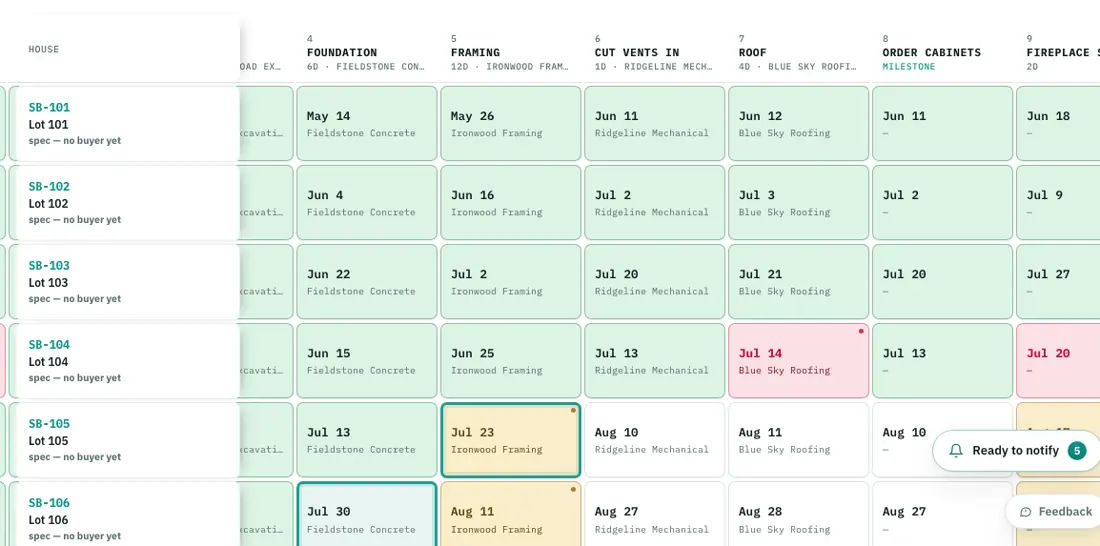
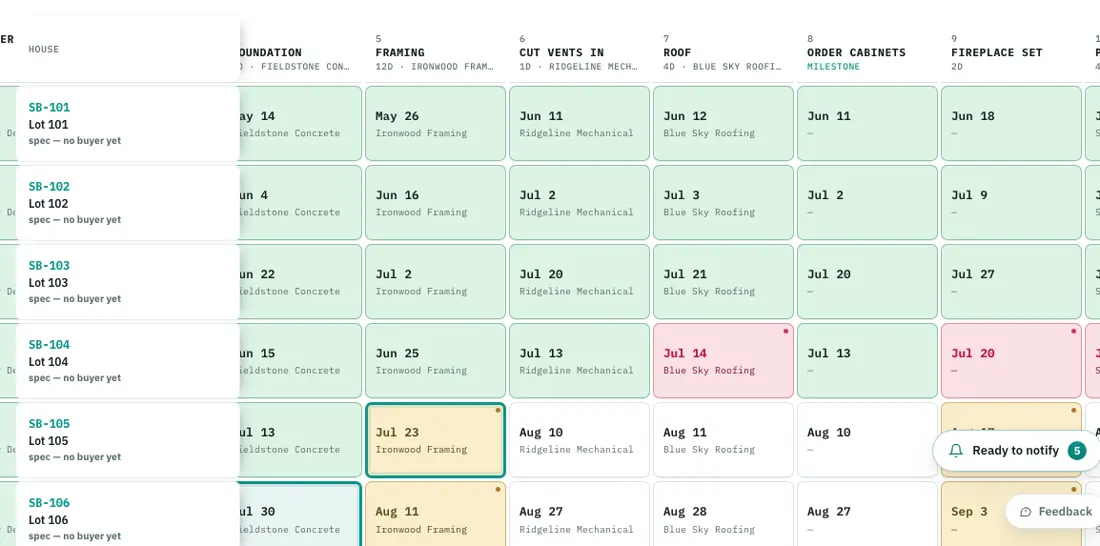
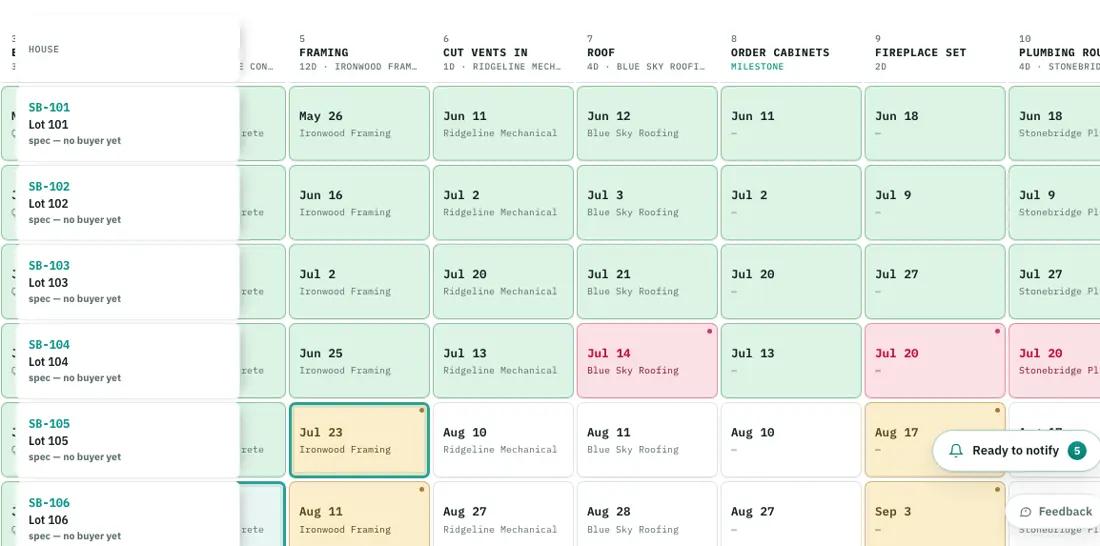
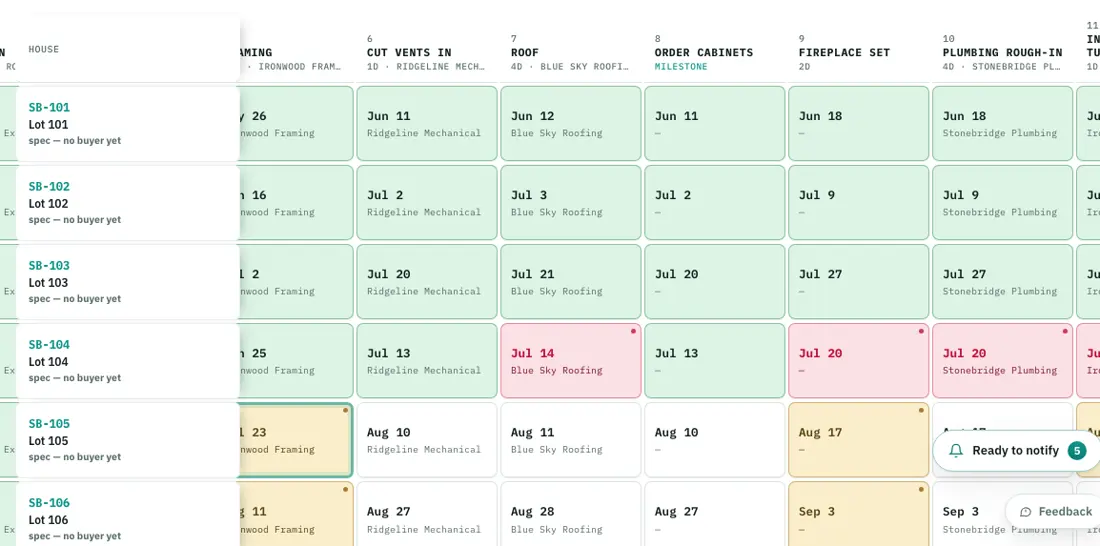
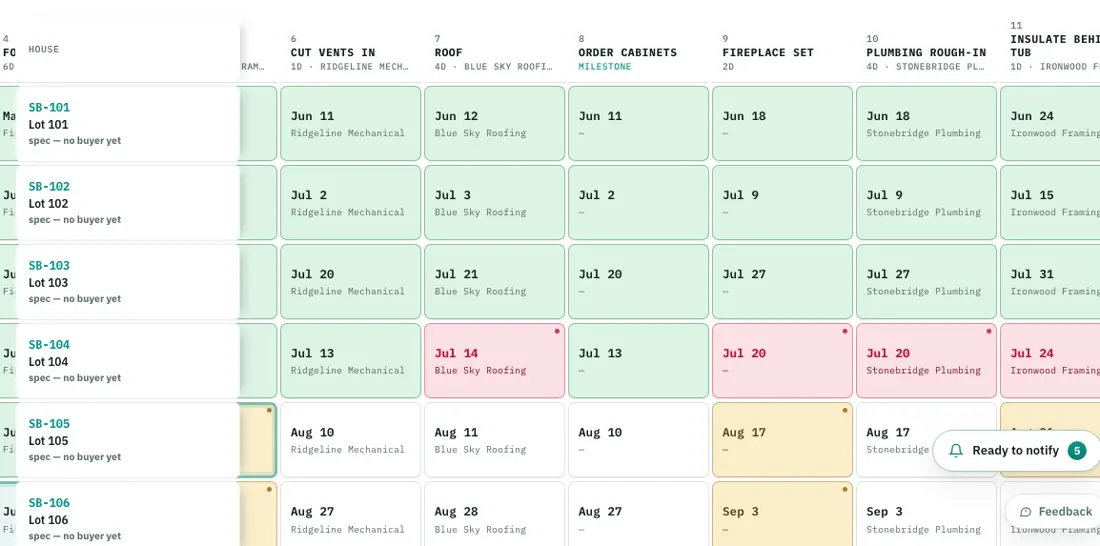
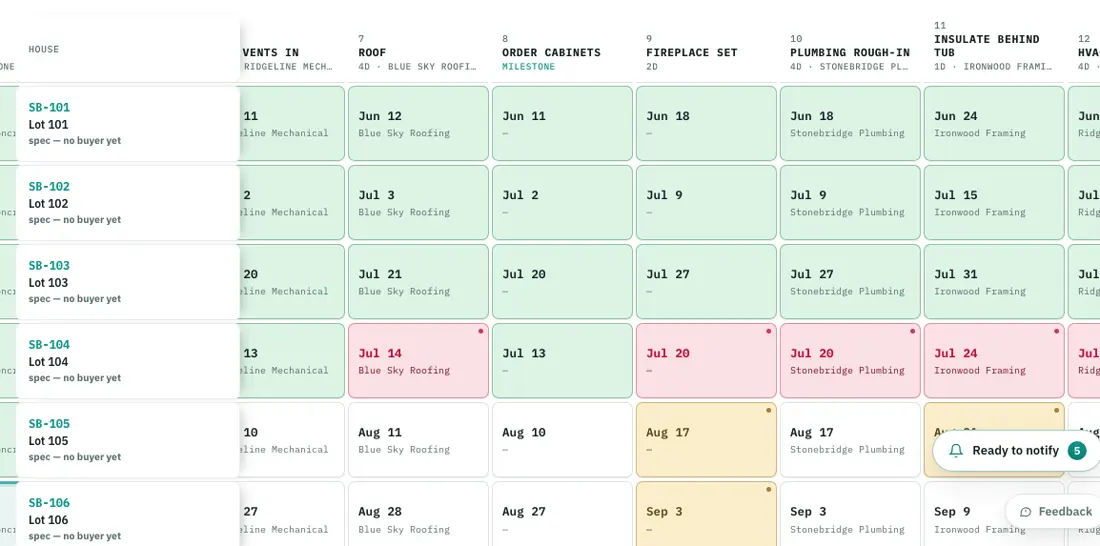
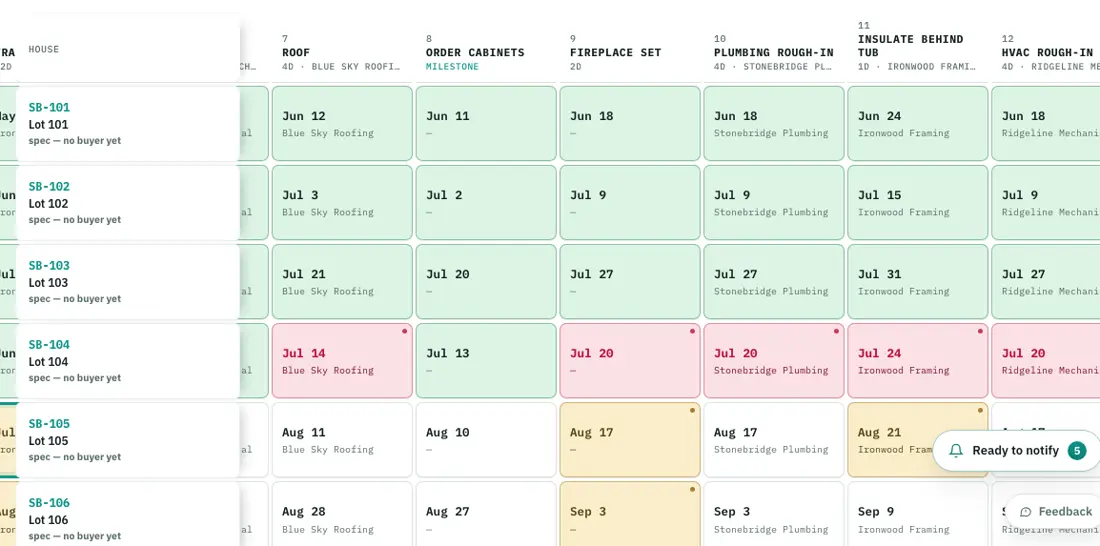
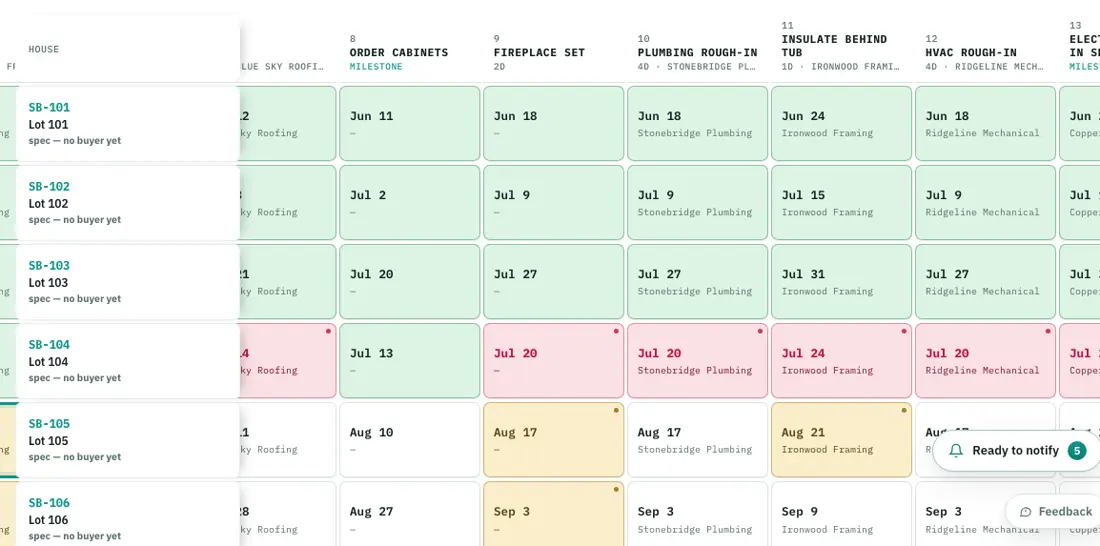
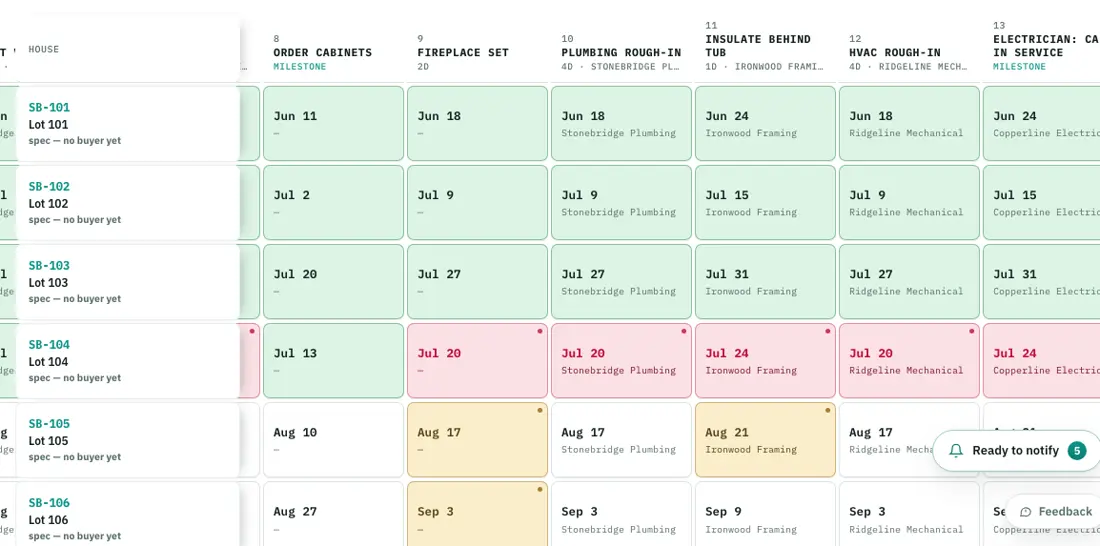
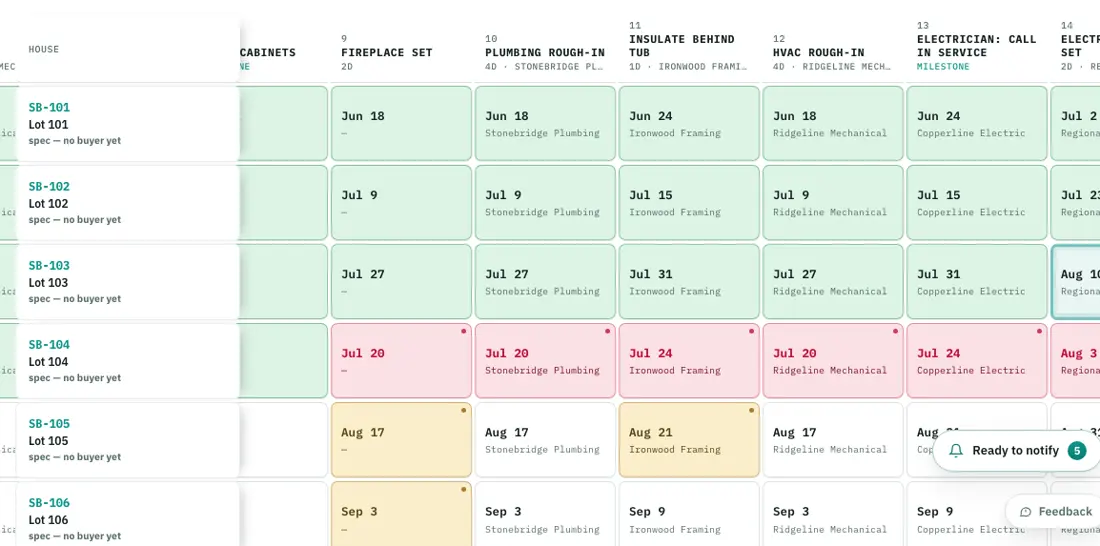
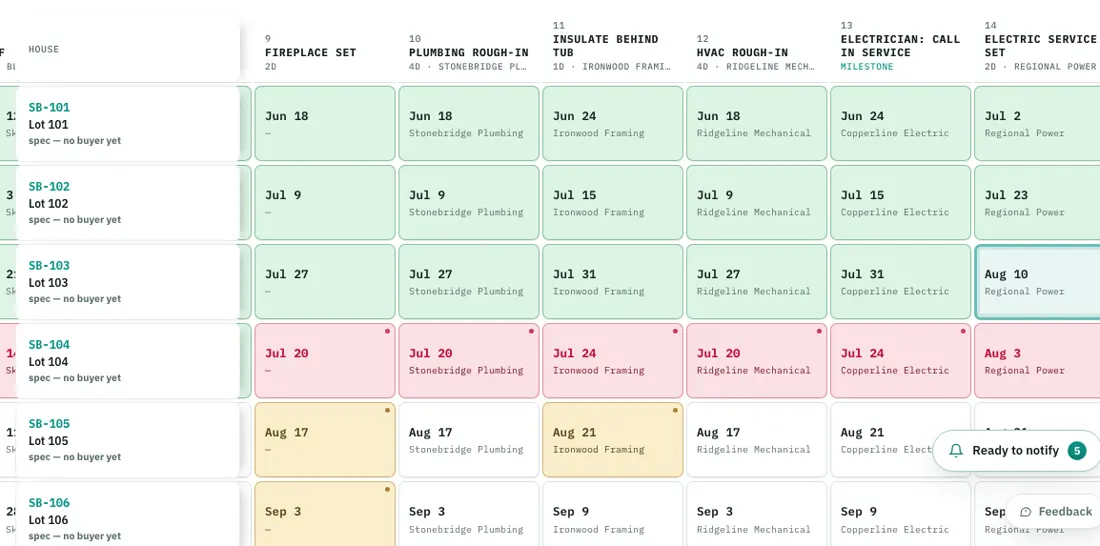
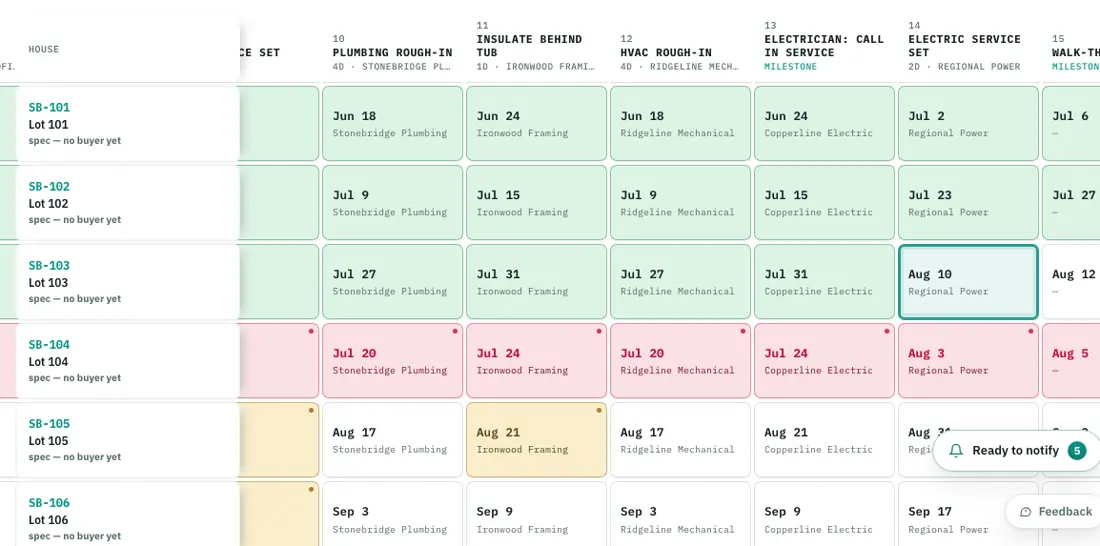
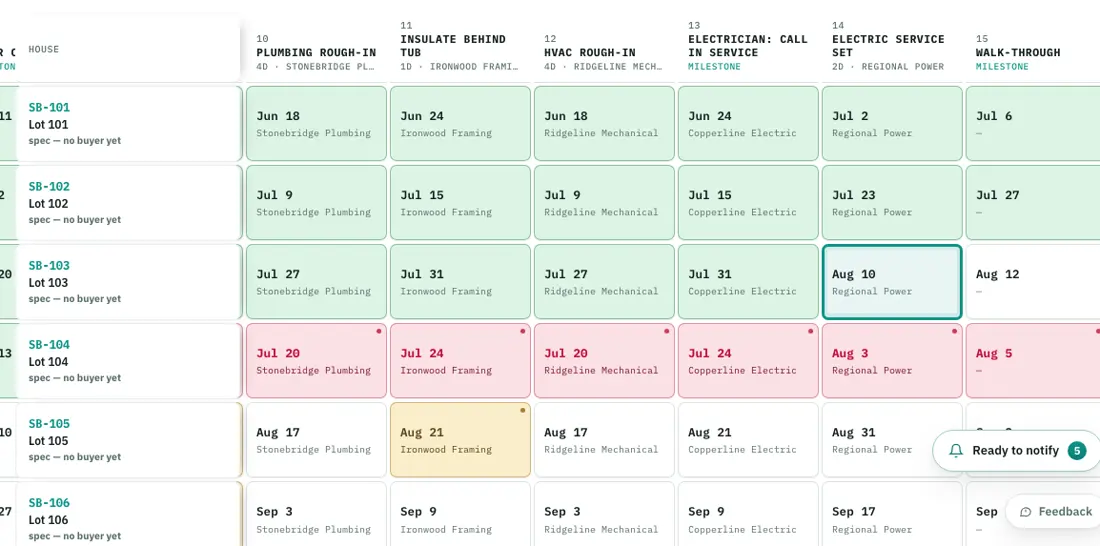
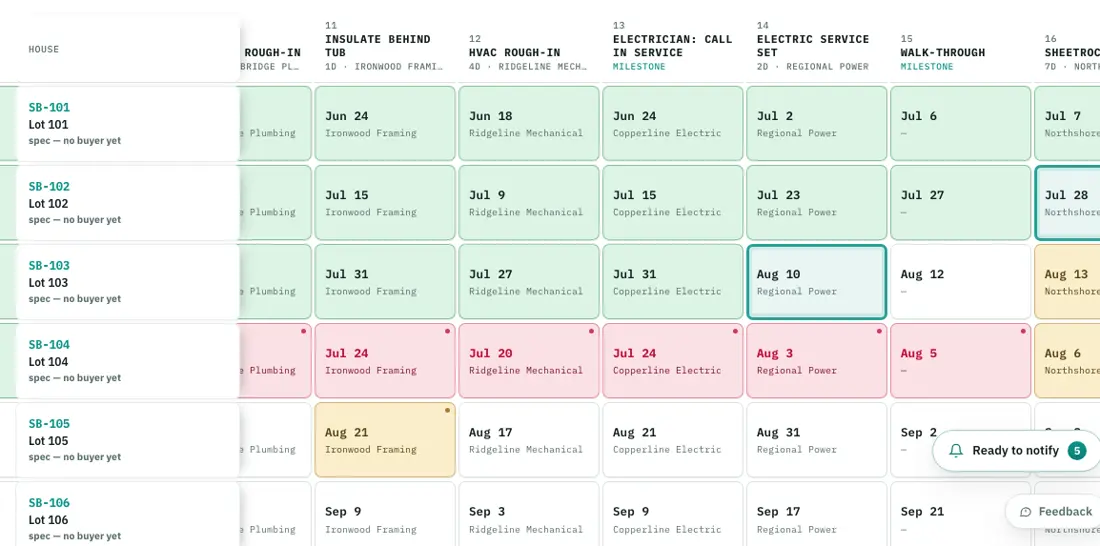
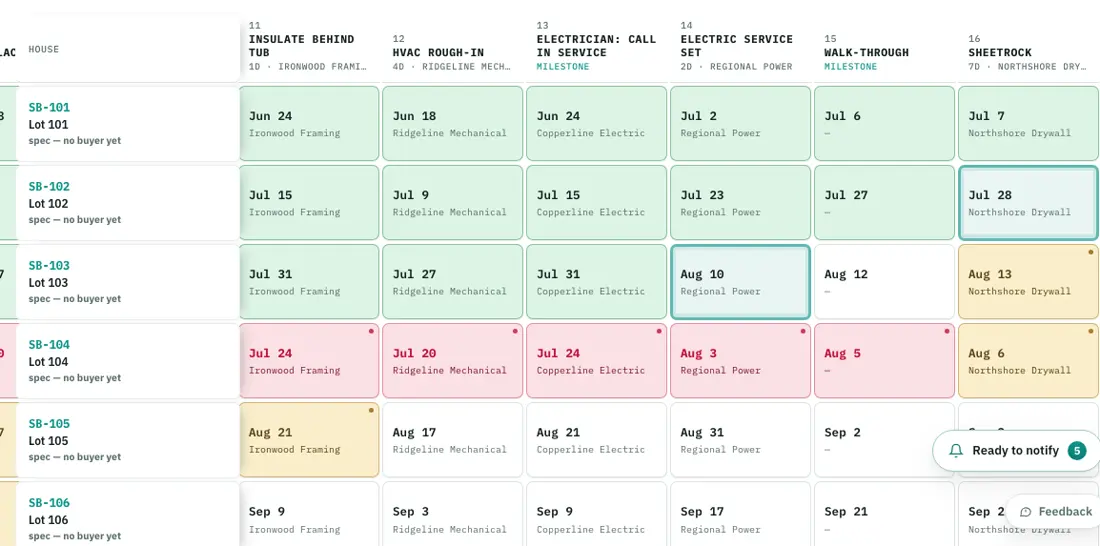
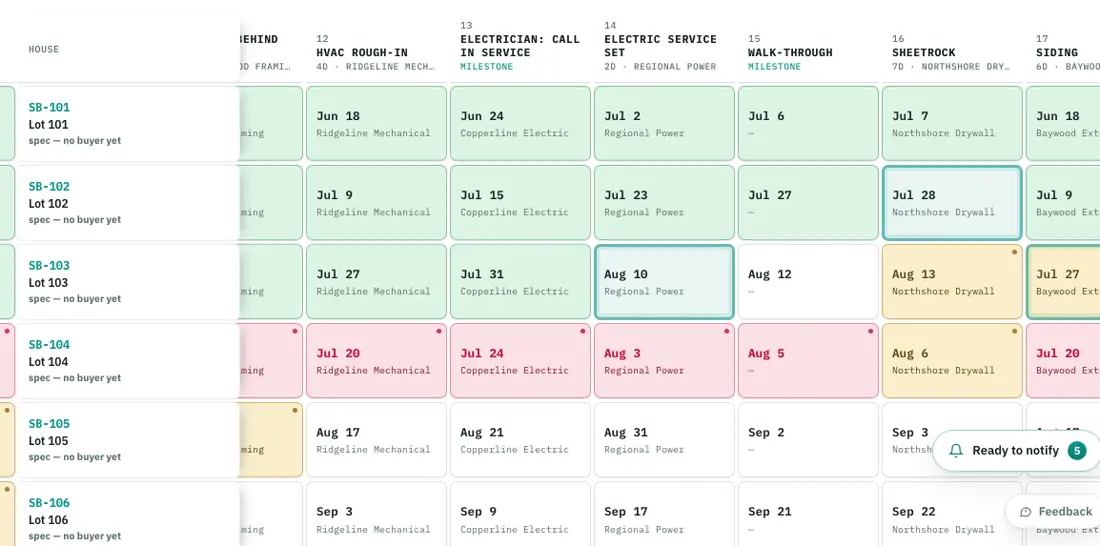
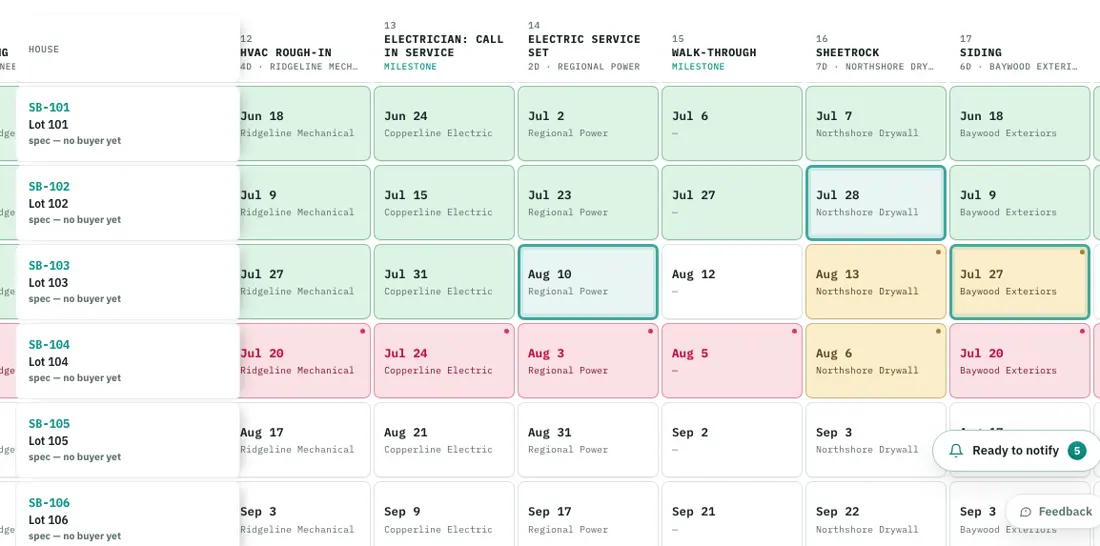
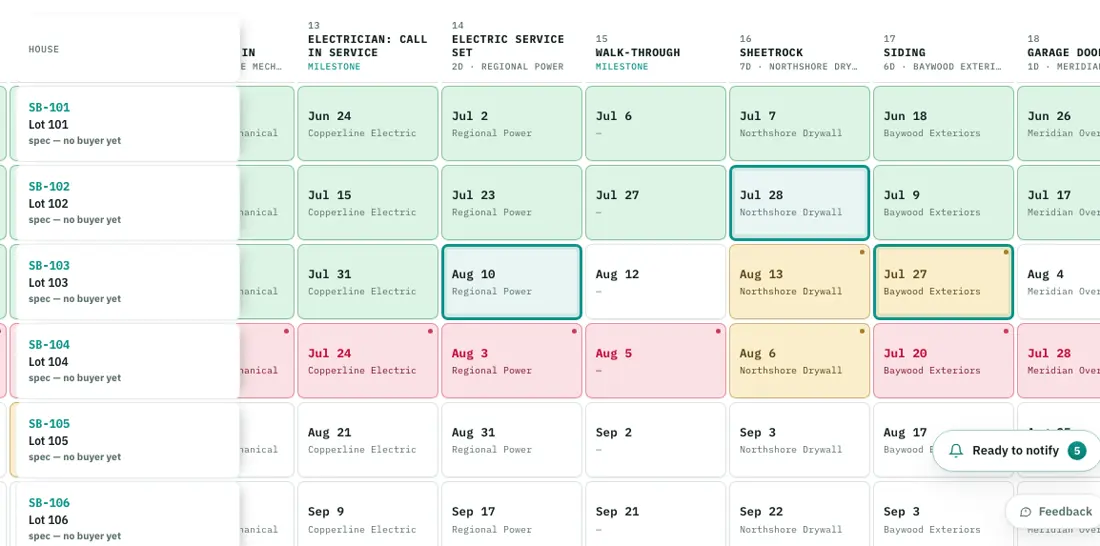
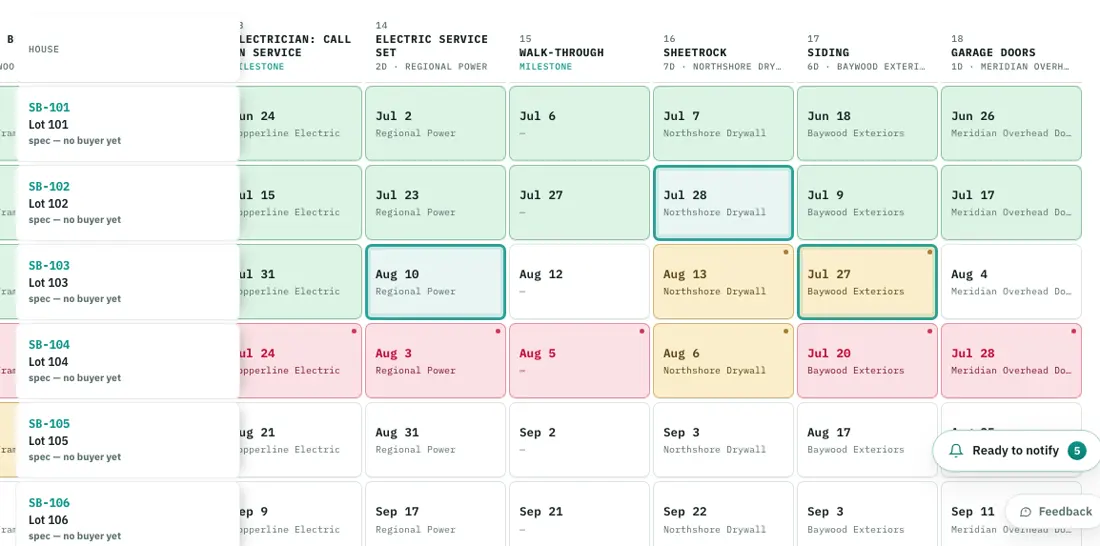
Every house down the side, every step across the top.
One grid holding every job you have and every move each one still has to make.
Nothing lives in a second place.
The board is not a report somebody assembles on Friday out of four other files. It is the database, drawn — so there is no version of it that can be out of date.
The colour is computed, not chosen.
Green is done. Red is late, or waiting on something overdue. Amber means nobody is on it yet, or the crew you want is booked on another job. Nobody sets these by hand, so nobody can forget to.
A house that is fine looks fine.
You are not reading rows hunting for the problem. The problem is the only thing on the screen that is not green.
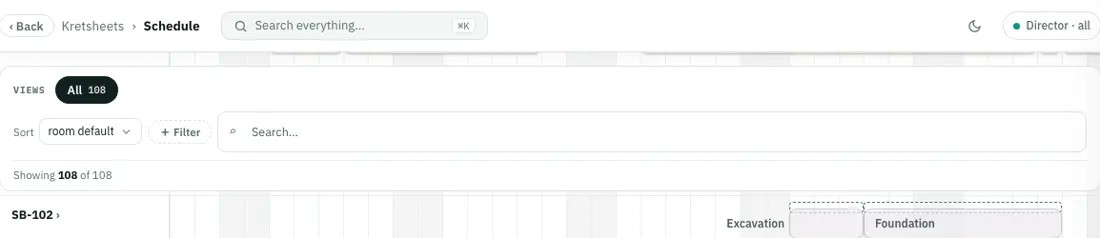
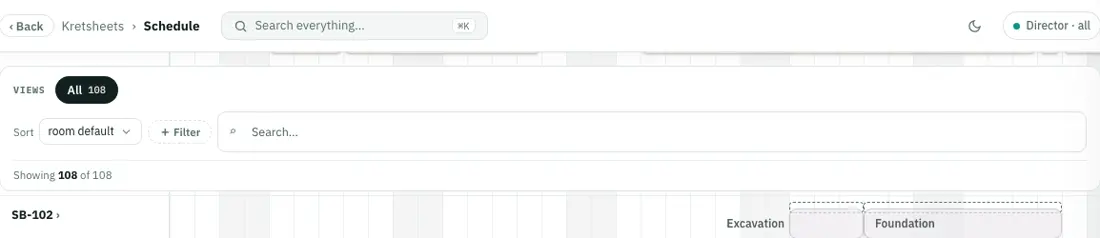
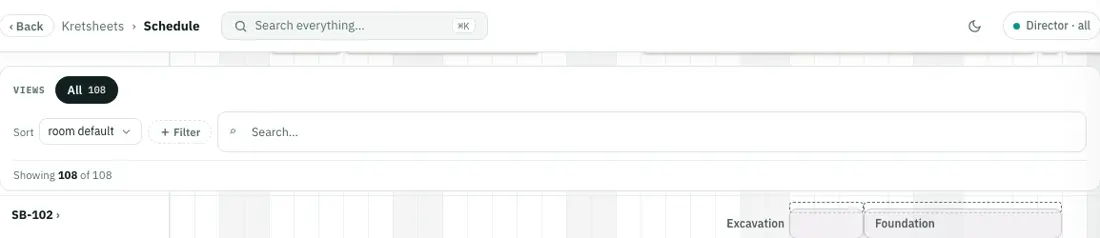
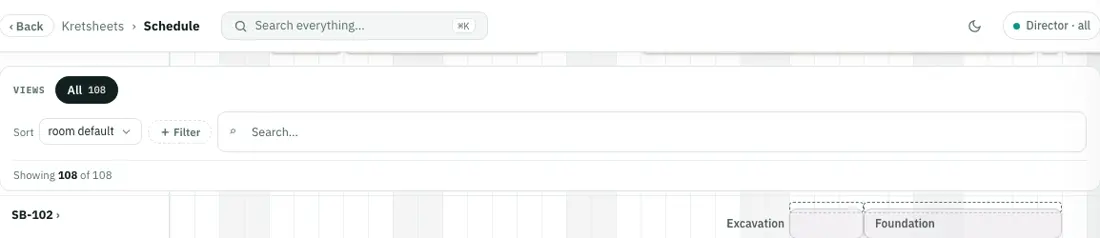
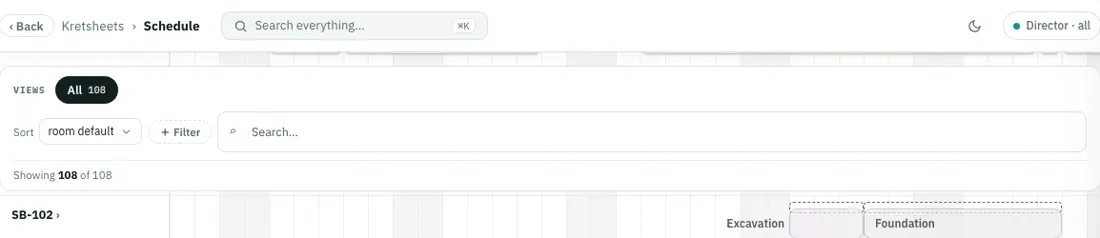
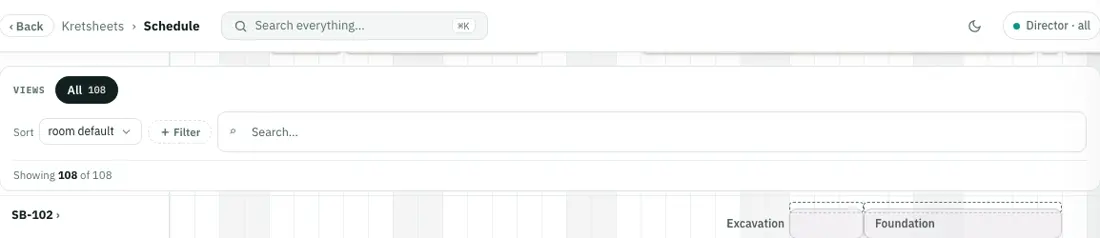
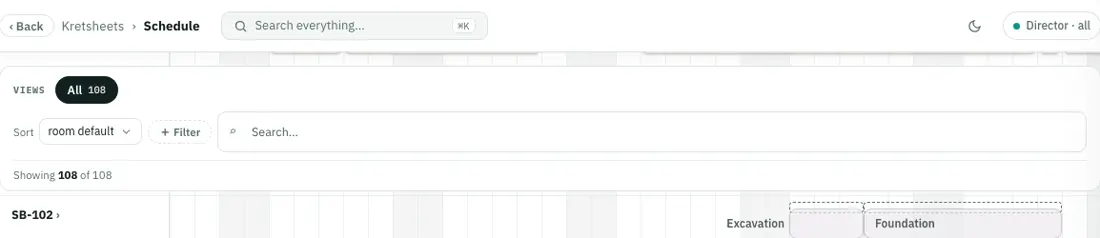
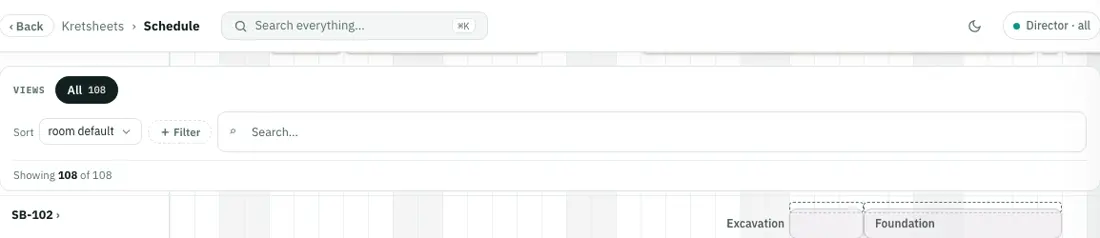
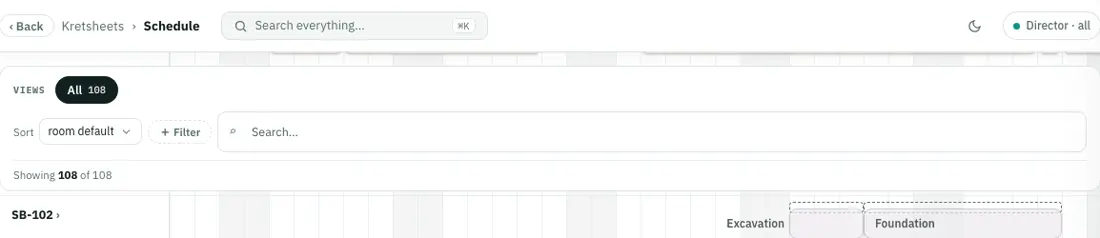
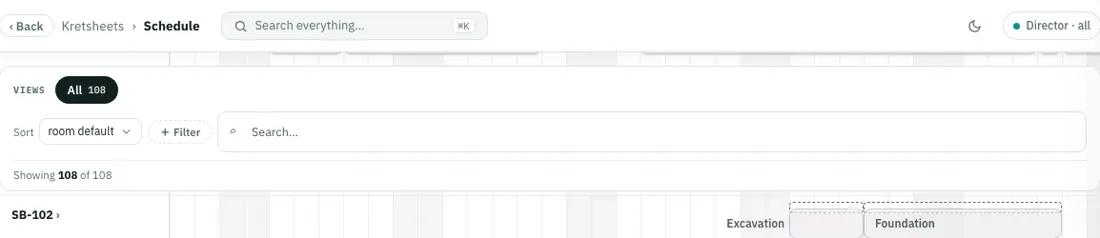
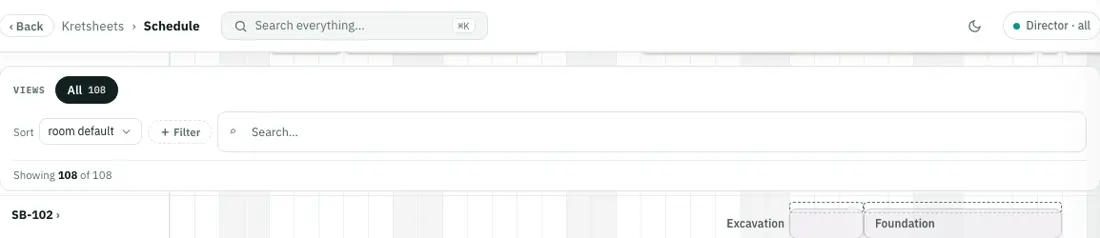
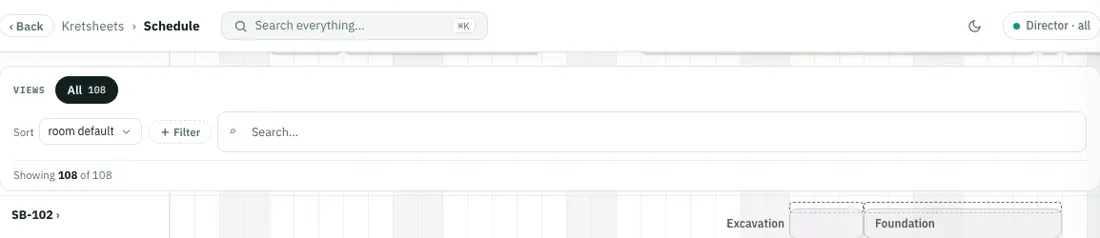
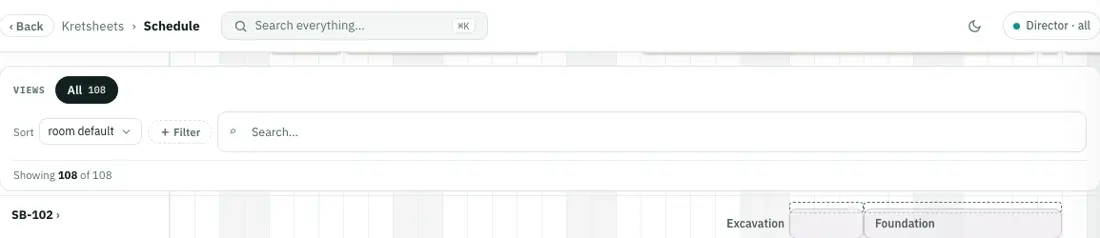
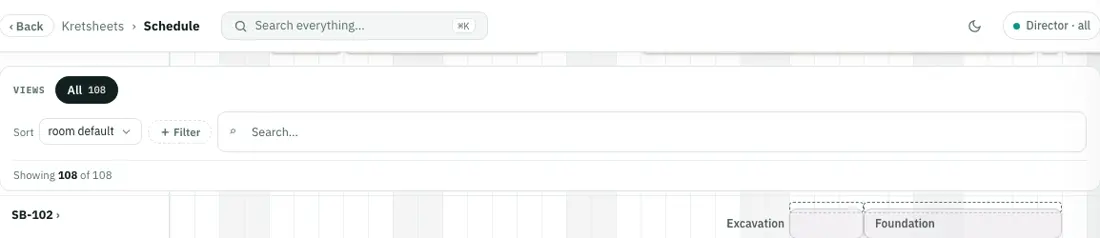
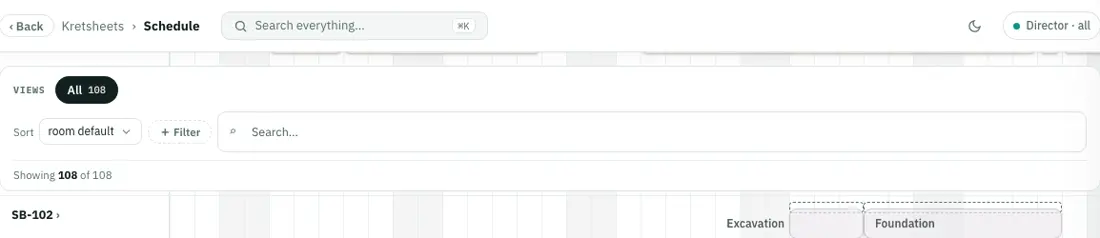
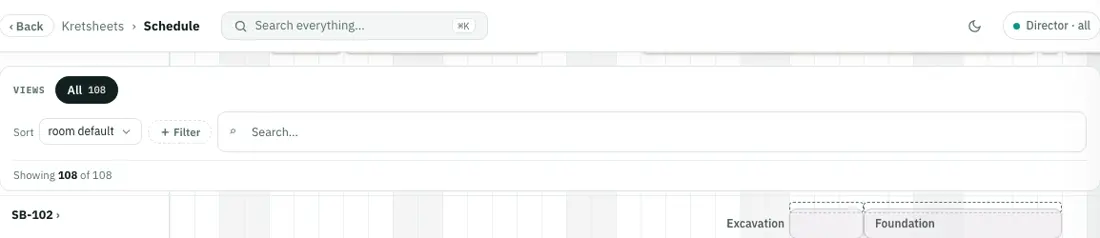
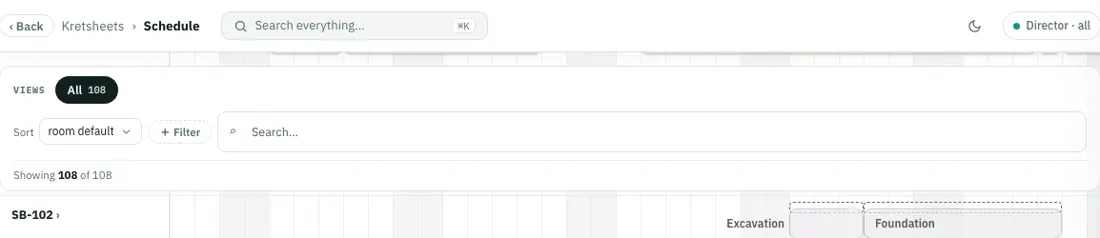
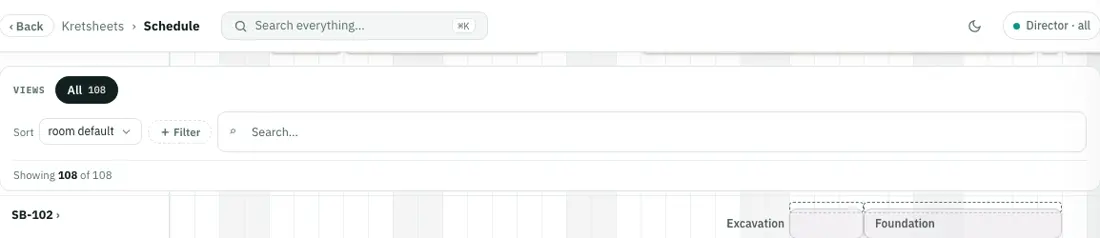
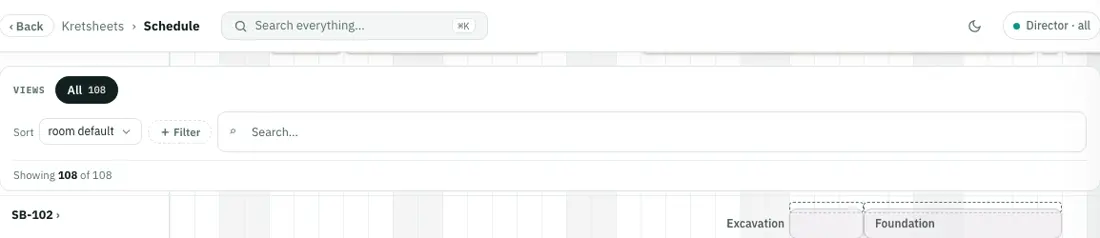
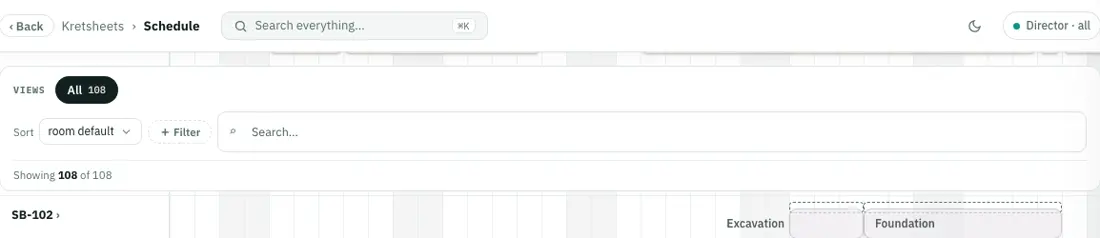
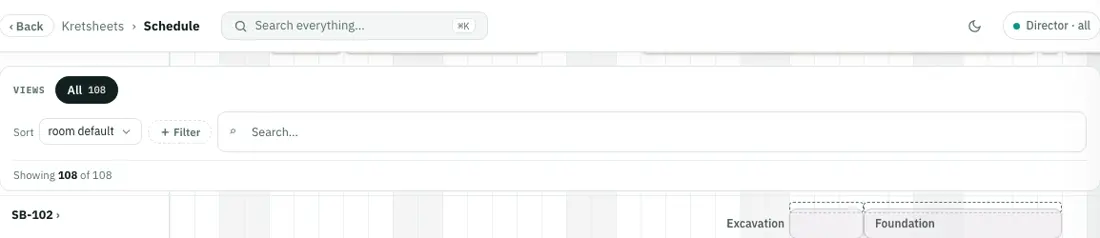
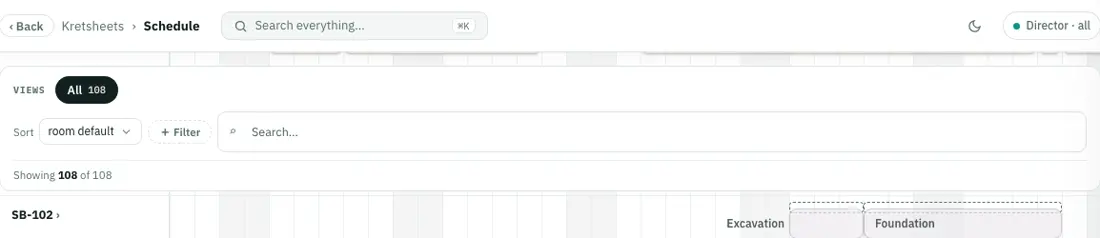
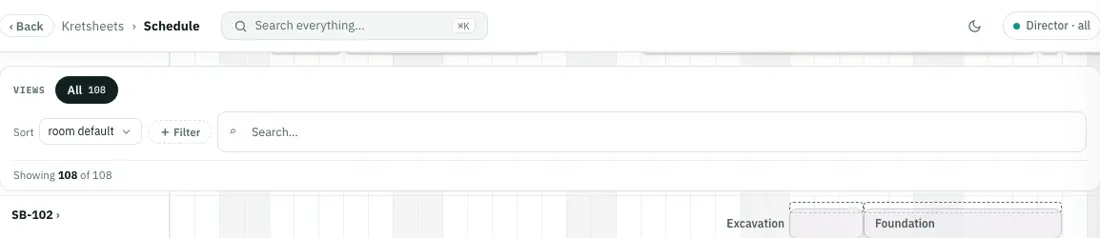
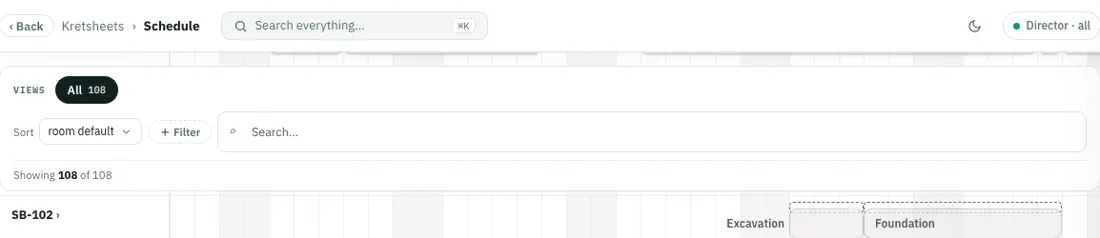
Move one date, and every date behind it moves too.
Drag a bar and the work that depends on it recalculates over your real working calendar — weekends and shutdowns included.
The dependencies are real.
Framing waits on the foundation, which waits on the hole, which waits on the permit. You say that once. It then holds for every house you ever build.
It proposes. It never overwrites.
Your plan does not move because software decided it should. You are shown what it would become, and you accept it or you leave it exactly where it was.
The dashed line is what you promised.
The baseline stays put when the work moves, because drift is only meaningful against something that refuses to drift with it.

The roof isn't late because the roofer is slow.
It is late because nobody sent him the plan. That is the sentence a spreadsheet physically cannot hold, so this holds it instead.
A document can hold up a step.
A permit, a truss drawing, an inspection. Name what a step is waiting on, and the schedule waits with it — without anybody remembering to go and move a date.
So a delay has a reason attached.
Not that a house is behind, but behind what, and whose desk that thing is sitting on right now.
One lot here is behind an email.
The plan set was approved and sitting there the whole time. Nobody sent it, so the roof never started, and everything behind the roof queued up behind four minutes of somebody's attention.
Come and look at it.
Bring a job you are running right now. It is the only honest test.